Why a Perfect Estate Plan Requires Your Story

You’ve done everything right. You’ve worked hard, saved diligently, and built something meaningful to leave your children and grandchildren. Now you’re ready to get your legal documents in place so your family will be “taken care of” when you’re gone.
But what if I told you that even perfect legal documents might actually harm the very people you’re trying to protect?
The Uncomfortable Truth About “Perfect” Estate Plans
Last year, my team took a call from the son of a client who had passed away just two weeks earlier. “Why can’t you get me my money now?!” he yelled. “I’ve picked out the Maserati and they can only hold it until next week!” He was planning to spend $180,000 of his $200,000 inheritance on a car.
His father’s estate plan had worked perfectly. Every legal document was properly executed. The money transferred exactly as intended. But this young man had no context for what that money represented—no understanding of the sacrifices made to earn it, no wisdom about how to use it purposefully.
If his father had shared even one story—perhaps about his own first major purchase and what he learned from it—this inheritance might have been used very differently.
Here’s a statistic that should make every parent pause: 70% of wealthy families lose their wealth by the second generation, and 90% have lost it by the third. These aren’t families who failed to plan—many had sophisticated legal documents and tax-efficient strategies crafted by the best attorneys. Their estate plans worked flawlessly.
So why did the wealth disappear?
Because perfect legal documents only solve half the problem. They efficiently transfer your assets, but they don’t transfer your wisdom about how to handle those assets responsibly.
The Day the Check Arrives
Picture this: Your estate plan executes perfectly. Your children receive their inheritance exactly as you intended. They deposit the check and then… life goes on.
Within months, that inheritance becomes “their money” with no connection to the decades of work and sacrifice that created it. Money without meaning becomes money without purpose. Your “perfect” estate plan just delivered a fortune to people who have no context for its true value.
“But My Story Doesn’t Matter to Them”
When I explain this problem to clients, I consistently hear the same objection: “But Catherine, my kids aren’t really interested in my old stories. And honestly, I haven’t done anything that remarkable—I just worked, raised my family, and tried to do the right thing.”
This response breaks my heart because it reveals a fundamental misunderstanding about the treasure these parents are sitting on.
Your children may not seem interested in your stories now, but that doesn’t mean they won’t desperately want them later. Most people don’t develop curiosity about family history until they hit their own major life challenges—career setbacks, relationship struggles, or health scares. Suddenly, they want to know: How did Mom handle it when Dad lost his job? What kept our family together during tough times?
Your “ordinary” life contains extraordinary wisdom precisely because it’s ordinary. Your descendants won’t need advice on climbing Mount Everest—they’ll need guidance on the same challenges you faced: How to recover from failure. How to make tough financial decisions. How to find meaning in difficult seasons.
The very experiences you dismiss as “unremarkable” are exactly what your children and grandchildren will face. Your wisdom about navigating these challenges is infinitely more valuable than any financial inheritance.
Your Story IS Their Story
Here’s something most people don’t realize: your family story is literally living inside your descendants’ DNA. Recent research in epigenetics shows that experiences can be passed down through generations at a cellular level.
That anxiety your grandson feels about money? It might be connected to financial struggles your father never talked about. The resilience your daughter shows in crisis? That could be the genetic echo of how your mother survived her own hardships.
When you share your stories with context and wisdom, you give your descendants the missing pieces to understand themselves. You transform inherited patterns from unconscious burdens into conscious strengths.
The Missing Half of Your Estate Plan
At Hammond Law Group, we’ve spent over 30 years watching families navigate inheritance. The families that truly flourish receive both financial capital and human capital—wisdom, stories, values, and explicit expressions of love.
This is what we call your TrueWealth.
Your legal documents are essential—they’re the delivery system for your financial assets. But without your stories, wisdom, and values, you’re delivering an inheritance that’s disconnected from its purpose.
Imagine instead: When your children receive their inheritance, it comes with a letter explaining what you hope this money will make possible. You share what you were like at their age and what you’ve learned about using money meaningfully. Your “unremarkable” story becomes their roadmap.
Your Next Step
Your life has meaning. Your story matters—especially the parts you think are ordinary. Your wisdom has value that extends far beyond any financial inheritance.
At Hammond Law Group, we help families create estate plans that transfer both possessions and purpose. Because truly taking care of your loved ones means giving them not just what you’ve earned, but who you’ve become in the process of earning it.
Ready to explore what your complete legacy could look like? Let’s start with a conversation about what matters most to you and your family.
True Wealth Workshop – August 16th, 2025.
Author Bio
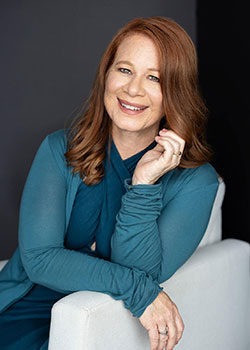
Catherine Hammond is the CEO and founder of Hammond Law Group, a Colorado-based estate planning law firm she founded in 2005. With a strong focus on protecting families from the legal consequences of disability and death, she creates comprehensive estate plans that minimize taxes, costs, and government interference.
A native of Denver, Catherine completed her undergraduate studies at Coe College in Iowa, and her Juris Doctorate from the University of Denver College of Law in 1993, concentrating on estate planning, tax, and mediation. Catherine is a member of various professional organizations, including WealthCounsel, ElderCounsel, the National Academy of Elder Law Attorneys, the Colorado Springs Estate Planning Council, and the Purposeful Planning Institute. Beyond her legal expertise, Catherine provides transformational coaching to support clients and their families through life transitions.
LinkedIn | State Bar Association | Avvo | Google